

The question is “Would you make money decisions based on AI answer?” If your answer is yes or a little bit, then this blog is for you.
In 2024, nearly two in five Americans (37%) were already using AI to manage their finances, with that number jumping to 61% among Gen Z. The appeal is obvious. ChatGPT can answer your question about retirement planning in seconds, without judgment, without appointment scheduling, and absolutely free.
Moreover, it sounds incredibly confident while doing so.
But here’s the uncomfortable truth. A comprehensive study by Investing in the Web tested ChatGPT with 100 finance-related questions. Industry experts reviewed the answers. The result? While 65% of responses were rated correct, the remaining 35% were flagged as incomplete, misleading, or incorrect.
Think about that for a moment. If you ask ChatGPT three questions about investing, statistically, one of those answers will be wrong.
AI looks smart but makes real mistakes
The problem isn’t that AI gives obviously terrible advice. Instead, it’s far more dangerous because the bad advice sounds just as convincing and confident as the good advice.
When researchers at the University of Illinois Urbana-Champaign tested ChatGPT’s financial guidance, they discovered something concerning.
The AI failed to suggest establishing a 529 tax-advantaged savings account when asked about college savings, and made basic math errors when calculating retirement savings. These aren’t small oversights. These are fundamental gaps that could cost you thousands of rupees over time.
In another case from November 2025, ChatGPT, Microsoft Copilot, Google Gemini, and Meta AI all gave UK consumers dangerous financial advice, recommending they exceed ISA contribution limits and providing incorrect tax guidance. Following this advice would have triggered penalties from HMRC, the UK’s tax authority.
Therefore, the question isn’t whether AI makes mistakes. The question is whether you can afford those mistakes when they happen to your money.
Why does AI struggle with your money?
AI chatbots are large language models, which means they’re essentially based on complex pattern-matching systems. According to research from Apple and the study published at arXiv, current LLMs “attempt to replicate the reasoning steps observed in their training data” rather than performing genuine logical reasoning.
In addition to this limitation, they have three critical weaknesses when it comes to giving genuine financial advice.
First, they can’t access real-time information reliably.
Although some AI models now claim to browse the web, a Money magazine test found that ChatGPT pulled a Zillow housing market report from February when more current March and April reports were already available.
When you’re making decisions about buying a house or refinancing a loan, outdated information can lead you in the wrong direction.
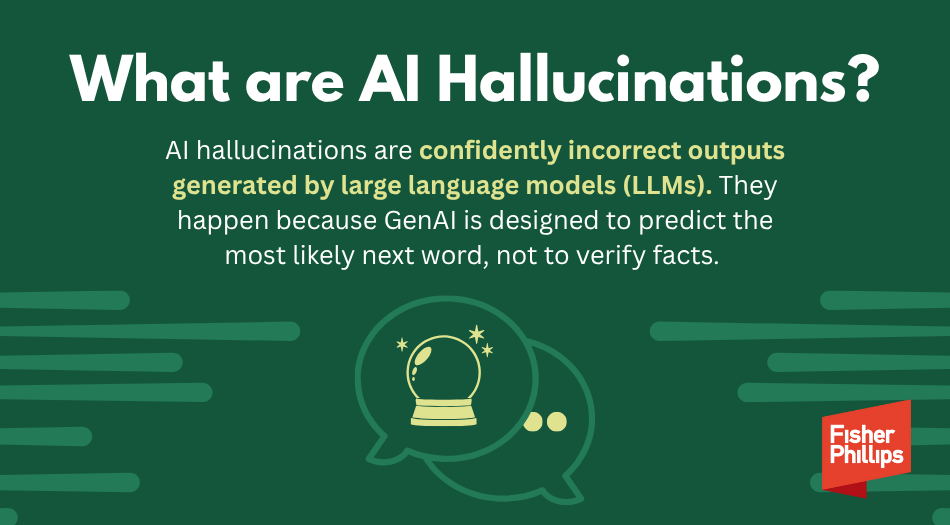
Second, they hallucinate.
This is the technical term for when AI confidently makes things up. Research shows that 47% of enterprise AI users made at least one major decision based on hallucinated content in 2024.
Furthermore, hallucination rates for GPT-3.5 stood at 39.6% and 28.6% for GPT-4 in systematic review tasks. Even the best models still produce false information at alarming rates.
Third, they lack context about your specific situation.
A certified financial planner considers your entire financial picture: your age, risk tolerance, tax situation, existing investments, and long-term goals. AI simply responds to your prompt.
As one researcher noted, ChatGPT “didn’t seem like it was empathizing with the client, the human touch” when reviewing high-risk investment scenarios.
The real cost of AI mistakes
Let me give you a concrete example of how these limitations play out in practice. A UK accounting firm recently reported that accountants are now spending between four and ten hours each month correcting AI-related errors for clients who relied on chatbots for financial guidance.
These errors included incorrect expense interpretations, VAT mistakes, payroll inaccuracies, and flawed tax planning.
That’s not just wasted time. That’s real money flowing out of businesses because someone trusted AI without verification.
Similarly, when researchers asked ChatGPT to predict stock returns, experts pointed out the model wasn’t accounting for volatility drag, dividend reinvestment, taxes on gains, trading costs, corporate actions, or inflation.
Therefore, any investment decision based on that projection would be fundamentally flawed from the start.
The financial services industry recognizes these risks. In fact, 77% of businesses express concern about AI hallucinations, and 39% of AI-powered customer service bots were pulled back or reworked in 2024 due to hallucination-related errors.
Even OpenAI’s CEO doesn’t trust ChatGPT either
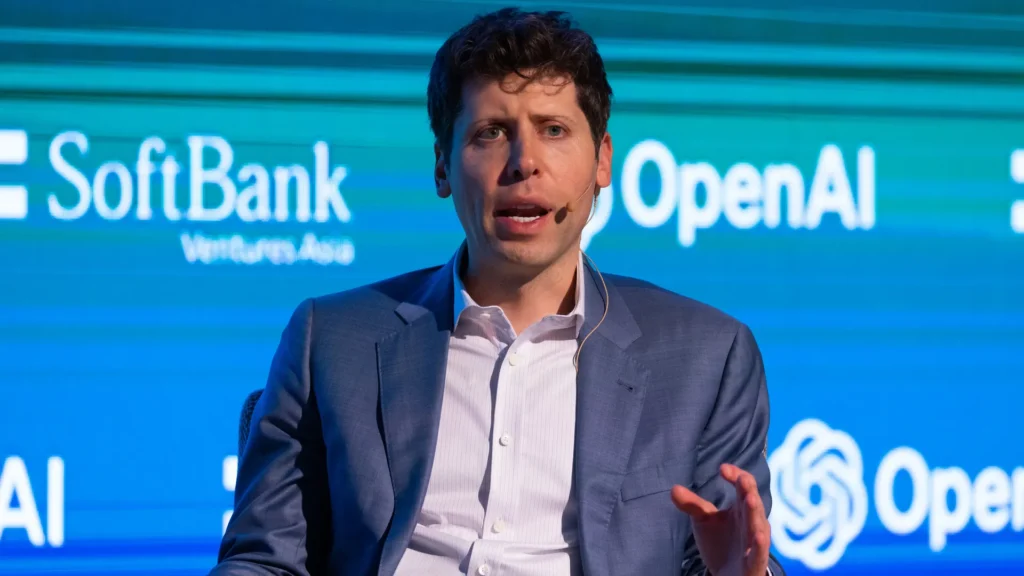
Perhaps the most telling warning comes from Sam Altman, CEO of OpenAI, the company that created ChatGPT. He said: “ChatGPT is incredibly limited, but good enough at some things to create a misleading impression of greatness. It’s a mistake to be relying on it for anything important right now”.
When the person who built the tool tells you not to rely on it for important decisions, that should give you pause.
Moreover, OpenAI has placed restrictions on financial topics. ChatGPT’s policies now explicitly prevent it from offering personalized financial, investment, or legal advice because the company recognized users were treating generalized information as professional guidance.
When AI can actually help
This doesn’t mean AI is useless for financial matters. It just means you need to use it correctly.
AI excels at explanation and education. If you want to understand what mutual funds are, how compound interest works, or what diversification means, ChatGPT can explain these concepts in plain language.
Pedro Braz, CEO of Investing in the Web, suggests: “A good rule of thumb is to use it early in the research process, to help clarify terms or shed light on a general topic”.
In addition to basic education, AI can help you generate questions to ask a real financial advisor. It can outline different investment strategies so you understand your options. It can even help you organize your financial documents or create a preliminary budget template.
However, once you move from “what does this mean” to “what should I do,” you’ve crossed into dangerous territory. Because AI doesn’t know your complete financial situation, it can’t tell you whether that rental property is a smart investment for you specifically, whether you should refinance your mortgage now, or how much you need to retire comfortably.
What you should do instead
Here’s the practical approach. Use AI as your starting point, not your endpoint. Let it help you understand financial concepts and terminology. Allow it to generate research questions. Then take those insights to qualified professionals or trusted sources.
For specific financial decisions, consult certified financial planners, tax professionals, or licensed advisors. These experts operate under fiduciary standards, meaning they’re legally required to act in your best interest.
AI carries no such liability and doesn’t take responsibility for its advice or outcomes.
Moreover, always verify any statistics or data points provided by AI. Research shows that ChatGPT sometimes sources answers from less-reliable personal blogs, which introduces errors into its outputs.
Therefore, cross-referencing important information with official sources like government websites, established financial institutions, or peer-reviewed research is crucial.
When it comes to time-sensitive information like interest rates, stock prices, or tax regulations, skip AI altogether. Go directly to the source. The original websites of the Federal Reserve and RBI will give you accurate current interest rates. The IRS website contains official tax information.
The bottom line on AI and your money
AI is a powerful tool, but it’s just a tool.
Even top-tier models still have hallucination rates ranging between 2% and 5% for general tasks, and financial advice is far more complex than general questions.
The technology is still improving.
Some models reported up to 64% drops in hallucination rates during 2025. However, “better than before” doesn’t mean “good enough for your retirement planning.”
Think of AI as a friendly helper who knows many general things but nothing about your personal money situation. AI doesn’t know your age, whether you’re 20 or 50. It doesn’t know if you need to support your aging parents or if you want to buy a house soon.
It has no idea how comfortable you are with taking risks with your money. AI can’t consider your current savings and investments, how secure your job is, or what you want to achieve with your finances.
You wouldn’t make major financial decisions based solely on what that acquaintance tells you at a party. Similarly, you shouldn’t make money decisions based on AI chatting.
Use AI to learn, to explore, and to organize your thinking. But when it’s time to actually move your money, invest your savings, or plan your financial future, bring in the professionals who have both the expertise and the accountability to guide you properly.
Because when it comes to your financial security, you can’t afford to be part of that 35% error rate.
Here are some more finance related topics that you might be interested in:
How To Save Money From Your Salary In 2026: A Complete Guide
What You Need To Know About Direct Vs Regular Mutual Fund Plans
Want To Know Which Saving Mistakes To Avoid? Read This
Budget Management Tips For Working Professionals – A Complete Guide