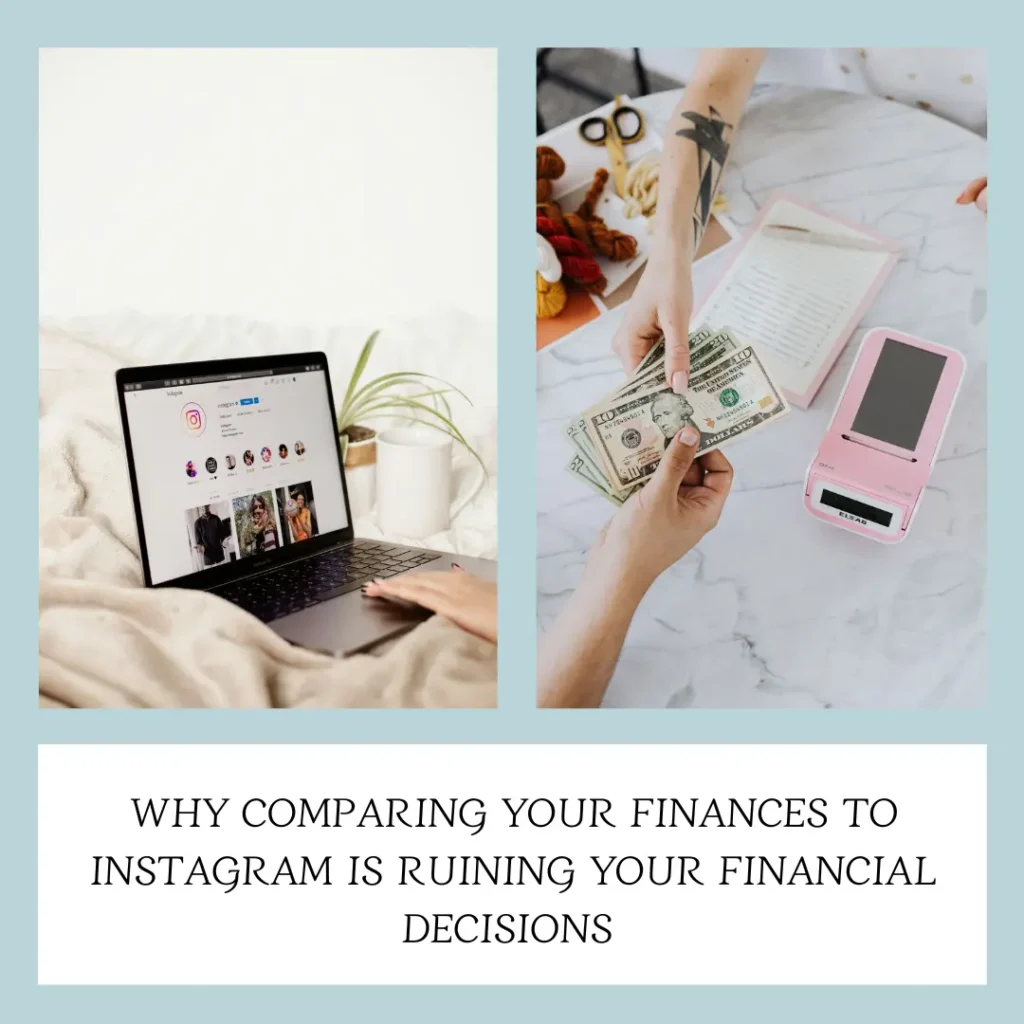
Nearly 3 in 10 Americans now say they feel “money dysmorphia” — a constant sense of being financially behind, even when their bank balance says otherwise. Among Gen Z, that number jumps to 43%. Among millennials, it’s 41%. A big part of this comes down to one quiet habit: comparing your finances to Instagram.
The biggest reason? Scrolling through other people’s curated lives and quietly measuring your own money against theirs.
This isn’t a small habit. It’s changing how an entire generation spends, saves, and thinks about success. And most people don’t even realise it’s happening.
What Comparing Your Finances to Instagram Actually Does to Your Brain
Every time you open Instagram, you’re not looking at real financial life. You’re looking at a highlight reel — the vacation, the new car, the branded shopping haul.
Nobody posts their EMI due date. Nobody posts their credit card minimum due. Nobody posts the loan they took to fund that “dream trip.”
But your brain doesn’t know that. It processes what it sees as real, and it quietly starts building a new definition of “normal.” A study cited by Credit Karma found that 95% of people who experience this kind of money-based anxiety say it actively hurts their finances — pushing them to overspend, save less, or take on debt they didn’t need.
That’s the real danger of comparing your finances to Instagram. It’s not just an emotional discomfort. It’s a decision-making problem.
The Numbers Tell a Clear Story
This isn’t guesswork or a vague feeling. Recent surveys have put real numbers behind this pattern, and they’re hard to ignore.
- 48% of Gen Z and 40% of millennials say social media causes them to spend money they don’t actually have, according to Intuit Credit Karma’s research with The Harris Poll.
- 62% of Gen Zers say they feel pressured to spend just to keep up with others, as per a LendingTree survey of nearly 2,000 consumers.
- More than half (51%) of Americans admit they’ve overspent to impress someone, and the younger the person, the higher the odds — 72% of Gen Z have done it.
- In India, social media users have crossed 490 million and continue to grow rapidly year after year, meaning more people are exposed to this comparison trap than ever before.
None of these numbers is about people with less financial discipline. They’re about people whose sense of “enough” got quietly rewritten by a feed.
Why Comparing Your Finances to Instagram Feels So Convincing
There’s a reason this comparison hits harder than comparing yourself to a neighbour or a relative. It’s the sheer volume and constant presence.
You don’t see your cousin’s new phone once. You see fifty strangers with the same phone, over and over, every single day. Your brain starts to treat repetition as proof.
Add to this the fact that influencers are often paid to make a lifestyle look effortless. A brand pays for the trip. A company gifts the outfit. The “regular person living large” is frequently neither regular nor living within their own means.
This creates what researchers call an unrealistic financial benchmark — a false idea of what an average life should look like, based on people who are not actually average.
Research on Gen Z and millennials in India has also pointed to something similar — heavy social media use tends to boost people’s confidence about money matters, even when their actual financial knowledge hasn’t grown much. In other words, scrolling can make you feel more financially “in the know” than you truly are, which is a risky place to make big decisions from.
This overconfidence, paired with constant exposure to curated spending, is a combination that quietly chips away at sound money judgement.
The Financial Decisions This Trap Quietly Ruins
This isn’t just about feeling bad while scrolling. It shows up in real money choices, some of which can take years to undo.

Here’s what tends to happen once comparison creeps into your financial life:
- You upgrade before you’re ready. The new phone, the branded bag, or the fancier apartment gets bought on EMI or credit, not because you needed it, but because everyone else seemed to have it.
- You skip investing to fund appearances. Money that could have gone into a SIP or an emergency fund goes into things that look good in a story or a reel.
- You take on debt for moments, not milestones. LendingTree’s research found that impressing a date and “wanting to feel successful” are two of the top reasons people admit to overspending.
- You start treating small treats as a lifestyle. One survey found 59% of young adults say frequent small “treat” purchases quietly turn into overspending over time.
- You delay real goals. Buying a house, clearing a loan early, or building retirement savings all take a back seat to keeping up appearances today.
Each of these choices might feel small in the moment. Together, they can push back your financial independence by years.
Comparing Your Finances to Instagram vs. Comparing Your Finances to Your Own Goals
Here’s a simple but important shift in thinking. Instagram shows you other people’s spending. It never shows you their savings, debt, or financial stress.
So when you compare, you’re comparing your complete financial picture — savings, debts, goals, income — against someone else’s tiny, edited slice of theirs. That’s not a fair comparison. It’s not even a real one.
A more useful question to ask yourself is: “Is this decision moving me toward my own goal, or moving me toward someone else’s highlight reel?”
That one question, asked honestly, can save you from a large number of regretful purchases.
Signs You Might Be Falling Into This Trap
You don’t need to feel obsessed with social media for this to be affecting you. It often works quietly in the background. Watch out for these signs:
- You feel a small jolt of “I need that too” almost every time you open your social media app.
- You’ve made a purchase you couldn’t fully justify right after seeing someone else’s post.
- You feel behind in life even though your savings or income have actually grown this year.
- You compare your starting point (a fresh job, a new city) to someone else’s highlight (years into their career).
- You’ve gone into debt, even a small amount, mainly to look a certain way to others.
If two or more of these sound familiar, it’s worth pausing and taking a closer look at your spending pattern.
This pattern also shows up differently across age groups. Younger earners, who are still building their income, tend to feel the pressure the most, since they’re comparing an early-career paycheque to someone else’s fully-formed lifestyle. That mismatch alone can push otherwise sensible people toward decisions that don’t serve them.
How to Break Free From This Comparison Trap
The good news is that this pattern can be unlearned. It just takes a few consistent habits, not a complete social media detox.
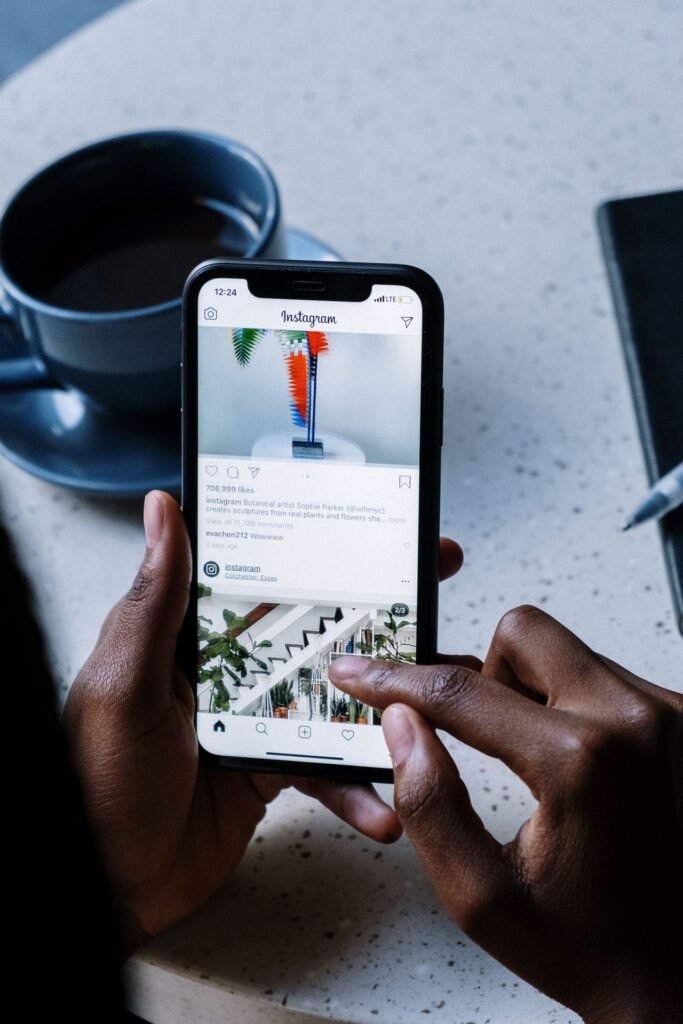
1. Curate your feed like you curate your budget. Unfollow accounts that consistently trigger the urge to spend. This isn’t about avoiding reality — it’s about avoiding a distorted version of it.
2. Set your own financial benchmarks. Base your money goals on your income, your city, and your life stage — not on a stranger’s edited post. A simple monthly budget or savings target works far better than an imaginary lifestyle goal.
3. Add a 24-hour pause before big purchases. If something feels urgent right after scrolling, wait a day. Comparison-driven urges usually fade once the emotional trigger is gone.
4. Track where “impress spending” shows up. Go through your last three months of spending and mark anything bought mainly to look good to others. Awareness alone often reduces this spending significantly.
5. Follow accounts that talk about real financial numbers. There’s a growing space of creators who share actual budgets, real debt payoff numbers, and honest investment journeys. These accounts help reset your sense of “normal.”
6. Remind yourself: financial peace doesn’t post well. A healthy emergency fund, a cleared loan, or a growing SIP rarely makes for an exciting story. But these are the things that actually build a secure life.
7. Talk about money more openly, offline. Comparison thrives in silence. A quick conversation with a friend or family member about actual budgets and real numbers can break the illusion faster than any amount of scrolling can build it.
The Bottom Line
Comparing your finances to Instagram will always leave you feeling behind, because you’re comparing your real, complete financial life to someone else’s curated highlight reel. The comparison itself is broken from the start.
Your money decisions should be built around your own goals, your own income, and your own timeline — not around what looks good in someone else’s feed. The moment you stop measuring your progress by someone else’s highlight reel, your financial decisions start getting a lot clearer, and a lot smarter.
Here are some more finance-related topics that we have covered for you:
How to Actually Negotiate a Higher Salary (Without Sounding Desperate)
Why Your Salary Feels Like It’s Never Enough (And 5 Proven Ways to Actually Fix It)
Stuck in EMI Overload? Here’s How to Actually Get Out of It
How to save money from your salary in 2026: A complete Guide
What you need to know about Direct vs Regular Mutual Fund Plans
Want to know which saving mistakes to avoid? Read This
Budget management tips for working professionals – A Complete Guide